
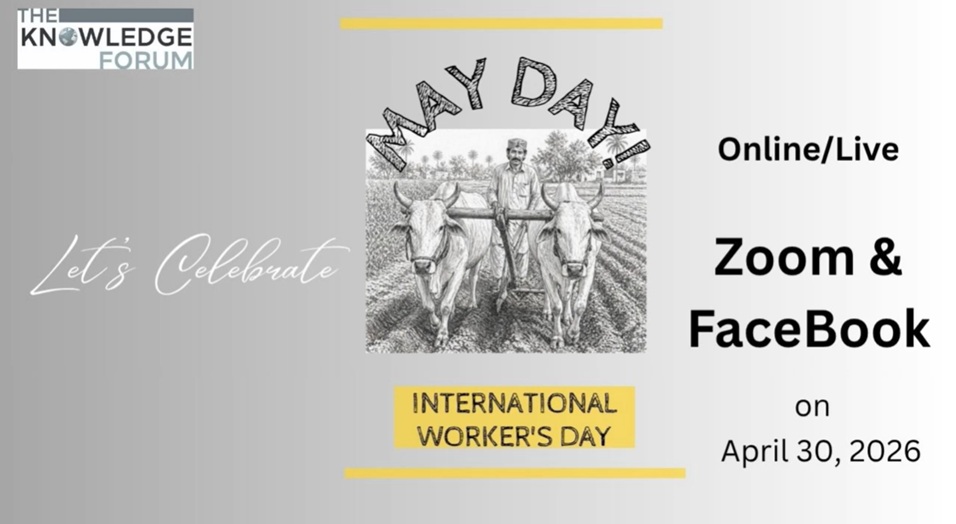
The Knowledge Forum organised an online May Day webinar titled “Honouring Workers, Advancing Rights: A May Day Dialogue” on April 30, 2026, bringing together labour leaders, human rights experts and civil society representatives to discuss the deteriorating condition of workers in Pakistan and the urgent need for stronger implementation of labour protections.
Participants expressed serious concern over weak enforcement of labour laws, unsafe working conditions and the growing exclusion of workers from legal protections and social security systems.
The webinar featured Secretary General of the National Trade Union Federation (NTUF) Nasir Mansoor, CEO of the National Organisation of Working Communities Farhat Parveen, senior human rights expert Muhammad Rafique, and President of the Hari Welfare Association Akram Khaskheli.
Speakers noted that Pakistan’s labour force had expanded significantly in recent years. According to the latest Labour Force Survey (2024–25), the country’s workforce has reached around 83 million people, with approximately 79.7 million currently employed. Despite this growth, participants said workers’ rights and protections remained weak and unevenly enforced.
Nasir Mansoor highlighted the steady decline of the trade union movement and blamed the increasing use of third-party contract systems for weakening labour protections. He said many employers were hiring workers through contractors, depriving them of benefits and rights guaranteed under labour laws. He also expressed concern over proposals for a unified labour code, warning that such reforms could weaken existing protections for workers.
Farhat Parveen focused on gender inequality in the workforce, stating that women workers continued to face discrimination in wages and working conditions. She pointed out that many women employed in agriculture and domestic work remained unpaid or underpaid despite legislative efforts to improve protections for women workers.
Human rights expert Muhammad Rafique emphasised the gap between Pakistan’s international labour commitments and domestic implementation. He cited alarming figures on child labour, modern slavery and informal employment, noting that trade union representation remained critically low.
Akram Khaskheli discussed the plight of agricultural workers in Sindh, particularly tenant farmers who remain excluded from formal labour protections and social security systems despite existing legal provisions and court rulings.
Speakers collectively called for stronger enforcement of labour laws, meaningful engagement with workers’ representatives and urgent reforms to ensure fair wages, safe working conditions and legal protection for all workers, especially women and those employed in informal and agricultural sectors.


