
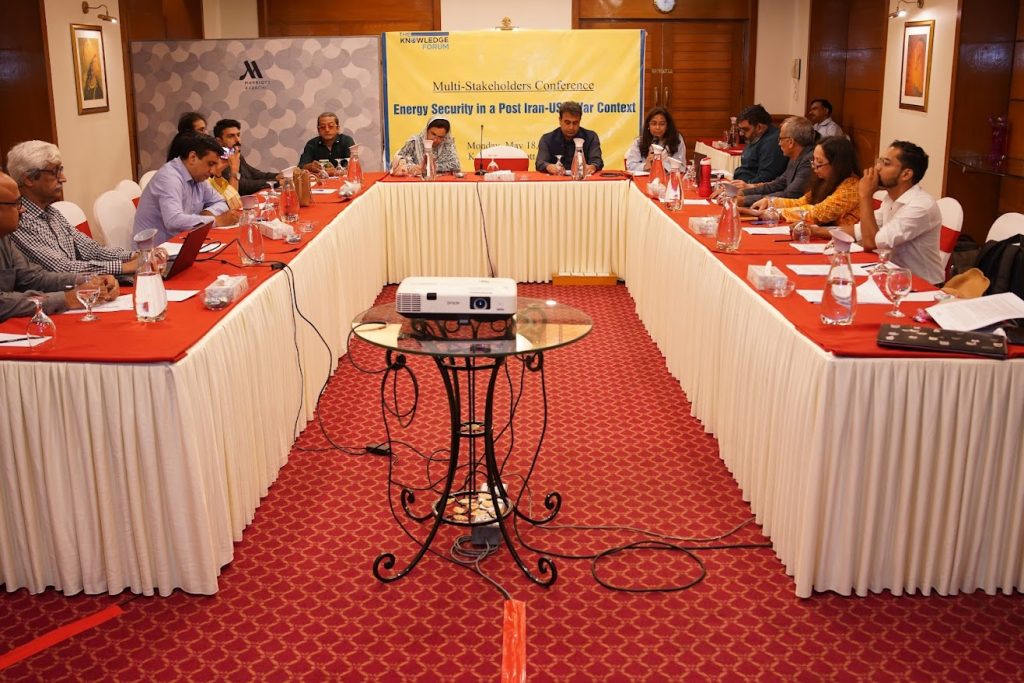
Concerned over Pakistan’s deepening energy crisis and its implications for the economy and ordinary citizens, The Knowledge Forum (TKF) organized a multi-stakeholder consultation titled “Energy Security in a Post Iran–USA War Context” in Karachi, bringing together parliamentarians, industrialists, energy experts, labour representatives, and civil society leaders.
Participants expressed serious concern over prolonged electricity outages, escalating power tariffs, and the increasing financial burden on industries and households. Representatives from the business community warned that high electricity costs and an unreliable power supply were undermining the competitiveness of Pakistani industries, forcing manufacturers and small and medium-sized enterprises (SMEs) to seek expensive alternative energy sources to sustain operations.
Speakers noted that the energy crisis was not limited to the industrial sector but was also severely affecting working-class families. Many consumers, they said, continue to face excessive electricity bills and extended periods of loadshedding despite paying their dues regularly.
During the consultation, TKF presented its Energy Security Charter, calling for immediate policy reforms to address the country’s energy challenges. The charter advocates increased investment in renewable energy, the removal of taxes on solar panels and battery storage systems, restoration of the previous net-metering framework, and a gradual shift away from costly imported fossil fuels towards affordable and citizen-centered energy solutions.
Members of the Sindh Assembly, including Rehan Bandukda, Farah Sohail, and Dr. Fouzia Hameed, assured participants that concerns regarding excessive loadshedding, industrial decline, and consumer rights would be raised in the Sindh Assembly.
The consultation also emphasized the need to accelerate the adoption of renewable energy technologies, strengthen electricity transmission infrastructure, enhance consumer protection mechanisms, and develop climate-resilient energy planning to ensure long-term energy security.
Participants concluded that affordable, reliable, and sustainable energy is critical for Pakistan’s economic stability, industrial growth, and the well-being of its citizens, urging policymakers to take immediate action to prevent the crisis from worsening.


