
Fatimeh Munawar
In Pakistan, the primary body responsible for overseeing water quality standards is the Pakistan Environmental Protection Agency (Pak-EPA). Established under the Pakistan Environmental Protection Act of 1997, Pak-EPA provides the legal framework for environmental protection, including the management of water quality. The agency formulates and enforces policies such as the National Environmental Policy (NEP) 2005, which aims to safeguard and preserve Pakistan’s environment and water resources. Pak-EPA sets water quality standards through the National Environmental Quality Standards (NEQS), monitors water quality, and enforces regulations by conducting inspections and taking action against violations.
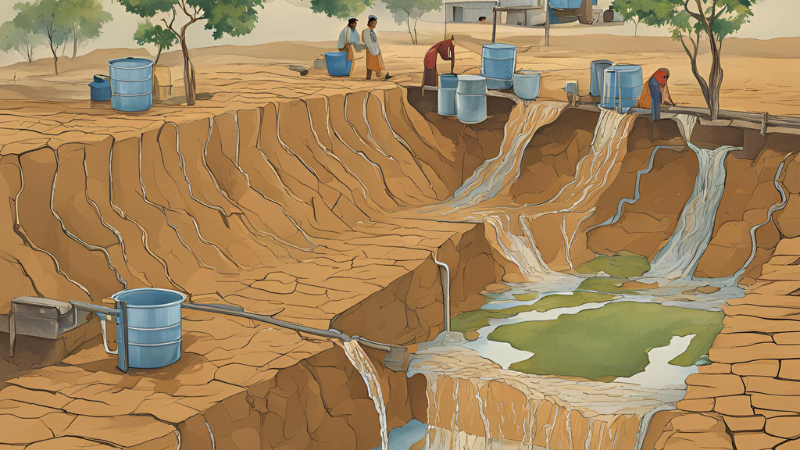
In Pakistan, challenges such as water scarcity, poor water quality, and inadequate water infrastructure has led to significant economic and social problems.
Poor water management contributes significantly to the crisis, with inefficient agricultural practices, outdated irrigation infrastructure, and mismanagement of resources leading to considerable water wastage. Only a fraction of water diverted for agriculture reaches crops due to leakage and inefficient distribution systems. The overuse of groundwater, particularly in the Indus Basin, has led to its depletion, further exacerbating the situation. Agriculture, which accounts for 94% of water withdrawals, heavily depends on groundwater. Water pollution from industrial discharge and inadequate sanitation infrastructure poses severe health risks, making waterborne diseases prevalent and affecting a significant portion of the population.
Climate change plays a critical role in Pakistan’s water troubles. Climate risk of erratic monsoon patterns, receding glaciers, and an increased frequency of floods and droughts disrupt water availability and affect agricultural productivity.
Pakistan’s water crisis has far-reaching impacts. Health is severely affected, with water scarcity and poor quality leading to diseases such as diarrhea, cholera, and hepatitis, placing a heavy burden on the healthcare system. Inadequate water and sanitation facilities contributed to an estimated 60,000 premature deaths in 2017.
Economic growth is also impeded by water scarcity, which reduces agricultural productivity, causing food insecurity and economic instability. Furthermore, inefficient water use results in environmental degradation, harming ecosystems and biodiversity. This environmental stress can exacerbate social unrest and conflicts over water rights.
Possible solutions and recommendations for addressing Pakistan’s water crisis include several key measures. Improving water governance will ensure coordination among water-related institutions, thereby increasing the effective implementation of regulations. Strengthening regulatory frameworks to monitor water quality and enforce regulations is crucial; this includes conducting regular inspections, penalizing non-compliant industries, and ensuring that all wastewater is treated before being discharged. Promoting water conservation measures through public awareness campaigns, capacity building, and community engagement is also essential. Equitable water allocation can be achieved by incorporating climate change considerations into water management policies and adopting efficient water pricing mechanisms. Reallocating water resources from the agricultural sector to other sectors will help balance water use and promote sustainable management practices. Finally, investing in infrastructure to improve water storage, distribution, and treatment facilities is vital to ensuring access to clean water for all.